
OCD — Obsessive-Compulsive Disorder
OCD is often misunderstood and underdiagnosed. Accurate recognition and appropriate treatment can make a significant difference.
Understanding OCD
OCD involves a pattern of obsessions and compulsions that can become distressing, time-consuming, and difficult to interrupt. It is characterized by unwanted, intrusive thoughts, images, or urges and repetitive behaviors or mental acts performed to reduce the distress those obsessions cause. I provide online OCD therapy for adults in New York and Florida, with treatment that may include Exposure and Response Prevention (ERP) when appropriate.
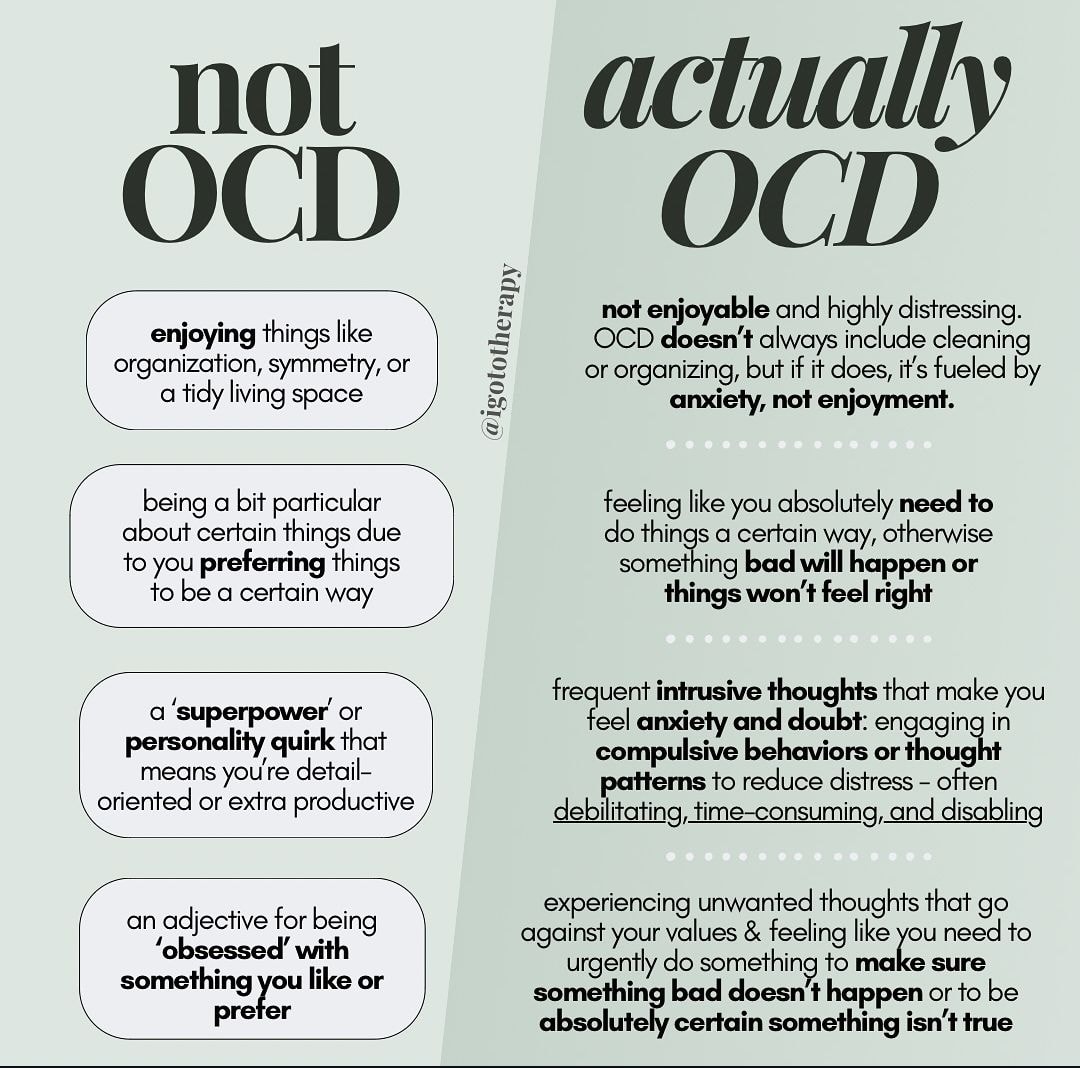
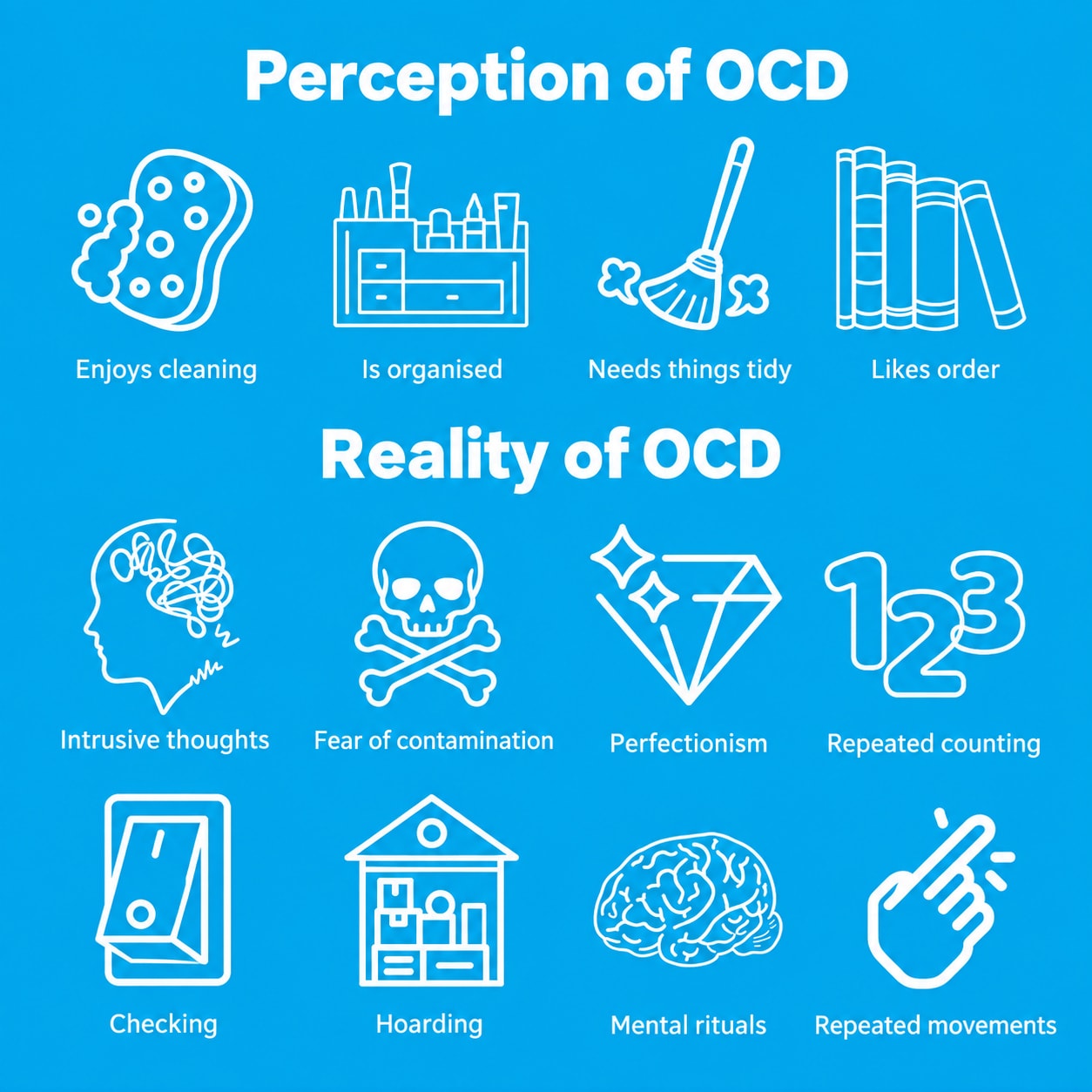
OCD is widely misunderstood. It is not simply about being neat, organized, or particular. OCD can take many forms, including contamination fears, harm-related thoughts, religious or moral obsessions, relationship doubts, fears of making mistakes, and many others. Some people with OCD have no visible rituals at all; their compulsions are entirely mental, such as reviewing, analyzing, or seeking reassurance internally.
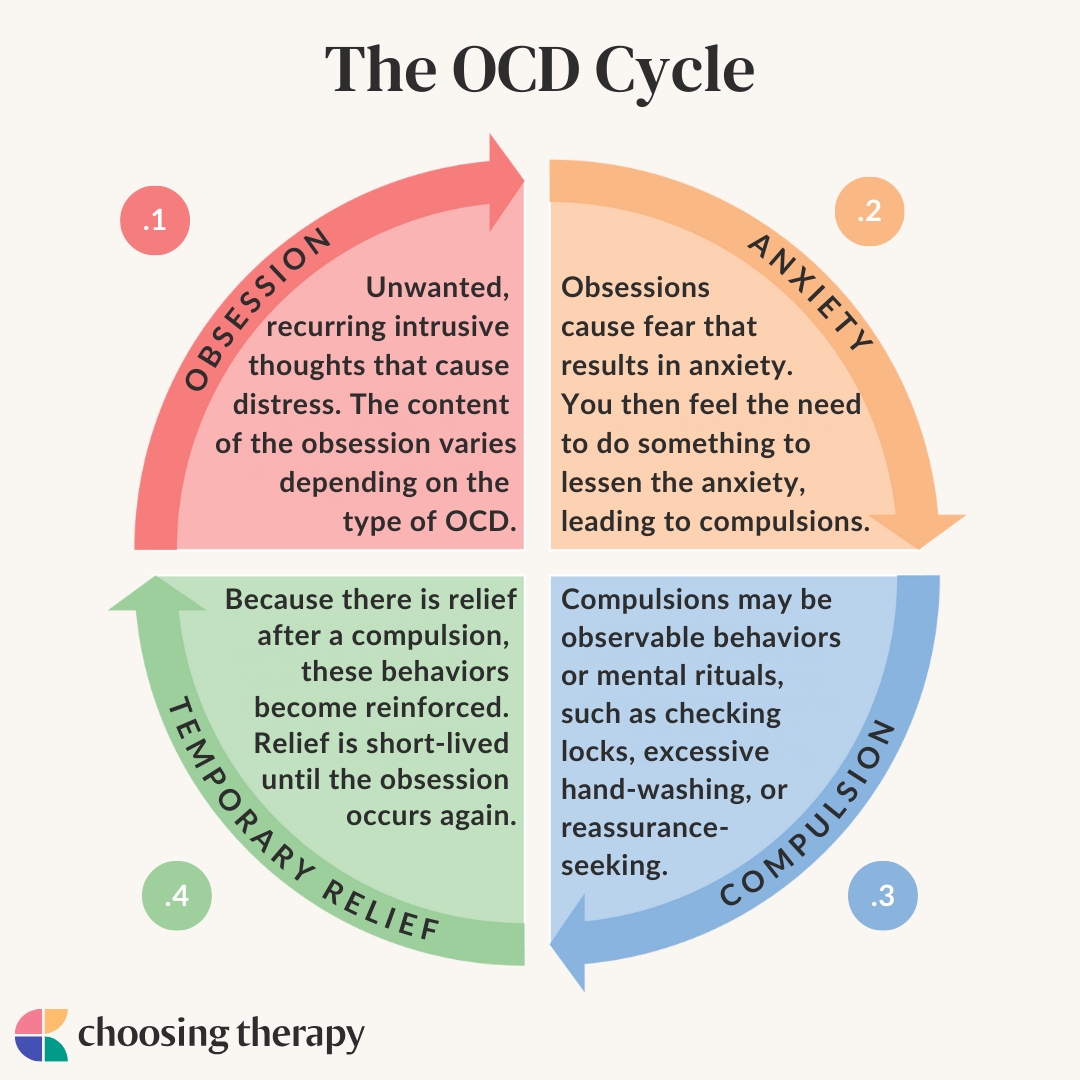
The common thread is the cycle: an intrusive thought triggers significant distress, a compulsion temporarily reduces that distress, and the relief reinforces the cycle, making the obsessions more likely to return. Treatment focuses on breaking that cycle rather than eliminating the thoughts themselves.
Common Presentations of OCD
Obsessions (intrusive thoughts, images, or urges)
- Unwanted thoughts about harm, contamination, or making a serious mistake
- Intrusive images or impulses that feel disturbing or out of character
- Persistent doubts, such as whether you locked the door or said something wrong
- Religious, moral, or relationship-focused obsessions
- Intense distress triggered by the thought, not the situation itself
Compulsions (visible or mental)
- Checking, cleaning, counting, or arranging
- Seeking reassurance from others or from the internet
- Mental reviewing, analyzing, or attempting to figure out a thought to reduce uncertainty
- Neutralizing or replacing a distressing thought with a different one
- Avoiding situations, objects, or people that trigger obsessions
- Rumination or prolonged attempts to gain certainty
OCD symptoms vary significantly between individuals. The specific content of obsessions is less important than the pattern: intrusive thoughts that cause distress, followed by compulsions that provide temporary relief. A careful assessment helps distinguish OCD from other anxiety-related conditions.
What is ERP, and how does it treat OCD?
Exposure and Response Prevention (ERP) is a well-established, evidence-based treatment for OCD. It involves gradually and collaboratively approaching the thoughts, situations, images, sensations, or uncertainty that trigger obsessive fear while practicing not engaging in the compulsive response. Over time, this teaches the brain that the feared outcome does not occur and that the distress is tolerable without the compulsion. ERP is done collaboratively and at a pace that is manageable. The goal is to build tolerance for uncertainty and discomfort, not to force exposure to overwhelming situations.
What is the difference between anxiety and OCD?
Anxiety and OCD share some features, including distressing thoughts and the urge to reduce discomfort. The distinction lies in the pattern: OCD involves intrusive thoughts that feel ego-dystonic (unwanted and inconsistent with who you are), followed by compulsions specifically aimed at neutralizing those thoughts. Standard anxiety treatments are not always effective for OCD, which is why accurate identification matters. If you are unsure whether what you are experiencing is anxiety or OCD, that is something we can explore together.
How I Treat OCD
Effective OCD treatment begins with accurately identifying the pattern of obsessions and compulsions. When OCD is the primary concern, treatment may incorporate ERP along with other appropriate cognitive and behavioral strategies:
Exposure and Response Prevention (ERP)
ERP is a well-established, evidence-based treatment for OCD. It involves gradually approaching feared thoughts, situations, or sensations while refraining from the compulsion that would normally follow. This is done collaboratively and at a manageable pace. Over time, ERP breaks the OCD cycle and reduces the power obsessions have over daily life.
Cognitive Behavioral Therapy (CBT)
CBT for OCD addresses the beliefs that give obsessions their power, such as the idea that having a thought means something about you, that uncertainty is intolerable, or that you bear special responsibility for preventing harm. Examining and shifting these beliefs can reduce the distress that drives compulsions.
Considering Therapy for OCD?
OCD responds well to appropriate treatment. I offer a free 15-minute consultation to discuss what you are experiencing and whether we might be a good fit.
Related Therapy Approaches
The primary evidence-based treatment for OCD is Exposure and Response Prevention (ERP). I also draw on other approaches depending on your specific concerns and goals.
Y-BOCS Severity Rating Scale
The Yale-Brown Obsessive Compulsive Scale rates the severity of OCD symptoms across 10 dimensions — five for obsessions and five for compulsions. Each item is scored 0–4; the total ranges from 0 to 40.
This is a validated screening tool, not a clinical diagnosis. Results are for your personal awareness only and are not stored or shared.
Time occupied by obsessive thoughts
How much of your time is occupied by obsessive thoughts?
Interference from obsessive thoughts
How much do obsessive thoughts interfere with your social or work functioning?
Distress from obsessive thoughts
How much distress do your obsessive thoughts cause you?
Resistance against obsessions
How much effort do you make to resist the obsessive thoughts?
Control over obsessive thoughts
How much control do you have over your obsessive thoughts?